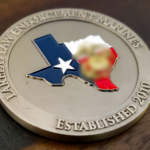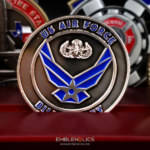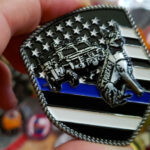
Challenge coins make excellent commemorative gifts, but their tradition goes well beyond simply collecting them. Military units, first responders, and other organizations have developed informal traditions around carrying, presenting, and even challenging one another with their coins.
One of the best-known traditions is the challenge coin check: someone produces a coin and challenges others in the group to show theirs. Depending on the group’s rules, whoever cannot produce a coin may owe the challenger a drink. Like many military traditions, the exact rules can vary considerably between units and organizations.
Below, we’ll walk through the most common challenge coin rules, traditions, and etiquette, including how a coin check works and how challenge coins are traditionally presented.
The Challenge Coin Tradition
Challenge coins are often presented informally to recognize service, achievement, membership, or a shared experience. The tradition is most closely associated with the military, but challenge coins are also widely used by law enforcement agencies, firefighters, government organizations, businesses, clubs, and other groups.
The challenge itself is an informal tradition rather than a single official set of rules. Different units and groups may have their own variations.
A common version of the challenge works like this:
- Someone produces a challenge coin and initiates a coin check.
- Everyone being challenged must produce their own coin.
- If someone cannot produce a coin, that person may owe the challenger a drink.
- If everyone produces a coin, some versions of the tradition require the person who initiated the challenge to buy the drinks instead.
Other versions compare the rank or significance of the coins being carried. That’s part of what makes challenge coin traditions interesting: the basic idea is widely recognized, but the details often depend on the people, unit, or organization involved.
Military Challenge Coin Rules
The exact origins of military challenge coins are difficult to document. One of the most frequently repeated stories traces the tradition to World War I, when members of an American flying squadron reportedly carried bronze medallions bearing their unit insignia.
You can read more about this story and the early military tradition in our guide to Army challenge coin history.
Regardless of exactly where the tradition began, challenge coins eventually became strongly associated with the U.S. Armed Forces. Today, military challenge coins are used for recognition, deployments, retirements, promotions, changes of command, unit anniversaries, awards, and many other occasions.
How Does a Military Coin Check Work?
There is no single official military-wide set of challenge coin rules, but one commonly described version of a coin check follows this protocol:
- Initiate the challenge. Produce your challenge coin and clearly initiate a coin check. In some traditions, placing or tapping the coin on a table is enough to start the challenge.
- Others produce their coins. Anyone participating in the challenge must show that they have a challenge coin with them.
- Someone without a coin loses. If a participant cannot produce a coin, tradition may require that person to buy the challenger a drink.
- If everyone has a coin, the challenger may lose. In many versions, successfully challenging a group in which everyone produces a coin means the challenger is responsible for the drinks.
Some units add time limits, rules about how far someone may move to retrieve a coin, or comparisons based on who presented the coin or the rank represented by it.
Do Different Military Branches Have Different Rules?
They can. Challenge coin traditions are often passed down informally, so individual commands, units, squadrons, ships, battalions, and groups may develop their own versions.
For example, some Marine coin traditions involve comparing coins based on the level of leadership associated with them. A coin presented by senior leadership may carry additional significance during an informal coin check.
The tradition itself remains strong throughout the Marine Corps, and Marine Corps challenge coins are commonly created around units, deployments, MOS communities, retirements, Marine Corps Birthday celebrations, and other milestones.
Firefighter Challenge Coin Rules
Firefighters have adopted many aspects of the challenge coin tradition while developing traditions of their own. Some departments use coin checks similar to those found in military communities, while others have their own station-specific rules.
One commonly repeated variation gives the person being challenged only limited movement to retrieve their coin, which makes carrying it part of the game.
Beyond coin checks, firefighter challenge coins are frequently used to represent stations, battalions, departments, rescue teams, memorials, retirements, promotions, and significant incidents.
Law Enforcement Challenge Coin Traditions
Police departments and other law enforcement agencies have also adopted challenge coins for recognition, department identity, special units, academies, retirements, memorials, and major events.
While some officers participate in traditional coin checks, the significance of a law enforcement coin often comes from the agency, unit, event, or individual it represents.
You can see more examples and uses on our custom police challenge coins page.
Challenge Coin Etiquette
Because challenge coin rules are informal, etiquette is usually more important than rigid enforcement of a universal rulebook.
Common challenge coin etiquette includes:
- Make sure people understand the challenge. Challenging someone unfamiliar with the tradition defeats the purpose of the game.
- Carry your coin. The tradition only works if participants actually keep their coins with them.
- Respect the meaning of the coin. Many coins commemorate service, people, units, or events that matter deeply to their owners.
- Don’t intentionally damage someone else’s coin. A challenge coin may have significant personal or historical value.
- Know your group’s rules. Traditions vary, so the rules used by one military unit or fire department may be different from another.
- Keep the challenge friendly. The point is camaraderie and tradition, not creating an argument over who owes whom a drink.
When and How to Give Someone a Challenge Coin
Challenge coins are often presented to recognize service, achievement, membership, or an important shared experience. The presentation can be formal or extremely understated depending on the circumstances.
Military leaders may present coins to service members following an achievement or important event. Police and fire departments may use them for recognition, retirements, promotions, memorials, or department milestones. Businesses and organizations may present coins for anniversaries, major projects, leadership recognition, or team accomplishments.
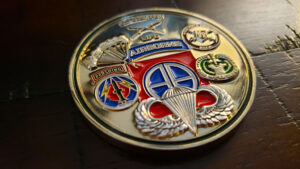
One traditional method is to pass a challenge coin during a handshake. The presenter conceals the coin in their palm and transfers it as the two people shake hands. This creates a personal exchange without requiring a formal ceremony.
Coins can also be presented publicly during retirements, award ceremonies, promotions, reunions, unit events, or other important occasions. There isn’t one correct method—the presentation should fit the reason the coin is being given.
What Should You Put on a Challenge Coin?
The design should reflect the organization, people, or event the coin represents. Common elements include unit insignia, department badges, logos, mottos, names, ranks, dates, aircraft, ships, vehicles, buildings, mascots, and other meaningful imagery.
Different manufacturing techniques can also change the character of a coin. Custom shapes, metal finishes, color enamel, 2D or 3D artwork, edge details, cutouts, and other features can all become part of the design. Explore our challenge coin manufacturing options for examples of what’s possible.
Create a Challenge Coin They’ll Want to Carry
The challenge coin tradition works because the coin itself represents something worth carrying. Whether it commemorates military service, a fire department, a police unit, an organization, or an important accomplishment, the strongest designs connect directly to the people receiving them.
Embleholics is a veteran-owned company creating custom challenge coins for military units, first responders, government organizations, businesses, clubs, and other groups.
Browse our challenge coin gallery for completed examples, or request a free challenge coin quote when you’re ready to create your own.
Recent Posts