The strongest custom Army challenge coin designs reflect how a unit sees itself: disciplined, aggressive, technical, tradition-driven, or tightly connected through morale and shared identity. Looking across different Army coins, you begin to see how military culture, mission, and personality are expressed through symbolism, storytelling, and design.
Here are 7 Army challenge coins and what they say about their units.
502nd MC (DAS)
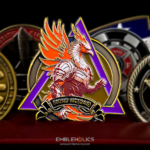
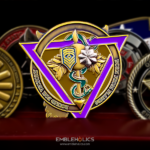
The 502nd Multi-Functional Company supports Army aviation operations in South Korea through maintenance, fuel, transportation, ammunition handling, and logistics coordination. Their role sits behind the scenes, but the mission depends on it functioning correctly every single day.
That mindset shows up clearly in their challenge coin.
Every element feels interconnected and intentionally layered, much like the unit itself. The triangular framing structure creates a feeling of organization and controlled complexity.
Even the Griffin mascot says something important about the unit’s culture. Griffins historically guarded treasures and protected strategic locations. They combine the eagle and the lion: vision and strength. For an aviation support organization, the symbolism is appropriate.
The coin reflects a unit that sees itself as dependable under pressure.
Madigan Army Medical Center
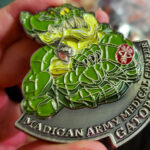
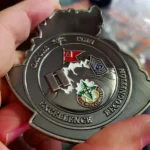
Medical organizations occupy a unique emotional space inside the military. They operate around trauma, recovery, long hours, readiness, and human vulnerability, yet many of them also develop some of the strongest internal cultures and morale identities in the Army.
The Madigan Army Medical Center coin features a muscular alligator mascot biting dog tags and crossing its arms. This injects humor and confidence into an environment shaped by serious responsibilities. The design feels bold, slightly exaggerated, and highly personal to the people inside the organization.
In high-pressure medical environments, personality and camaraderie become part of resilience itself. Humor, mascots, nicknames, and internal traditions help create cohesion inside organizations that regularly deal with stress, trauma, and emotional fatigue.
Some of the strongest military units maintain cohesion through shared identity and morale. Challenge coins often become physical reminders of that internal culture.
48th Infantry Regiment “Dragoons”
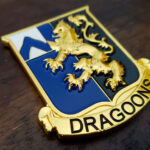
Certain Army units have their identity shaped by the expectation of preserving a long-standing lineage. The 48th Infantry Regiment “Dragoons” coin clearly reflects that mentality.
The heraldic shield shape, the dragon imagery, and the formal composition all feel connected to military tradition. The coin carries the atmosphere of a unit that sees itself as part of a continuing story.
The “Dragoons” title itself reinforces that identity. Historically associated with mounted infantry, the term carries ideas of adaptability, battlefield mobility, and combat heritage.
That relationship with legacy matters inside many Army organizations.
Units with deep histories often carry a stronger awareness that current soldiers are temporary stewards of something larger than themselves.
Army CID

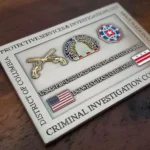
The Army CID challenge coin is shaped as a square that resembles a credential or identification plate more than a traditional challenge coin. The front contains only three letters: CID (Criminal Investigation Command).
Organizations involved in investigations, intelligence, and security often build a culture around control, discipline, and credibility. Excessive symbolism can work against that identity. In this case, they are trying to reflect their authority, competence, and precision.
The design’s confidence comes from its simplicity and clarity.
USASA-K
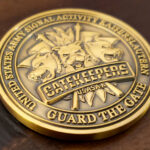

The USASA-K coin feels restrained in a way that says a lot about the organization behind it.
The design relies on symbolism tied to guardianship and vigilance. The most revealing element is the hound imagery associated with the “Gatekeepers.” Historically, guardian hounds appear across mythology as protectors of thresholds, entrances, and restricted spaces. They represent watchfulness.
The design carries the quiet confidence of an organization that does not need to advertise its importance loudly. Even the subdued brass finish contributes to that feeling.
That mentality exists throughout many technical Army organizations. Their work happens in the background, but enormous operational consequences depend on precision and reliability. The coin communicates exactly that.
Corpus Christi Army Depot
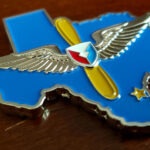
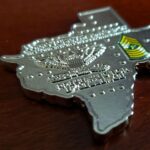
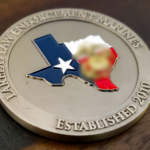
Using the shape of Texas as the foundation of the design grounds the coin in place, permanence, and institutional stability. The imagery communicates rootedness to a geographical place that is relevant to the unit. It ties the place to infrastructure, maintenance, and long-term operational support.
The mission of Corpus Christi Army Depot is to sustain aviation readiness at scale through repair, remanufacturing, and industrial support.
Depot and maintenance organizations rarely become the public face of operations, but large portions of military readiness depend entirely on their consistency.
Their identity is more about trustworthiness.
7th Signal Command
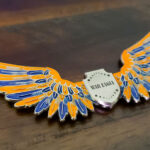
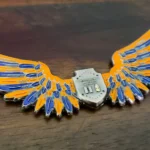
Combat arms units often define themselves through force projection. Signal organizations tend to think differently. Their mission revolves around connection, communication, and extending operational capability across enormous distances.
The 7th Signal Command coin captures that.
The winged structure creates a sense of expansion instead of containment. The design reflects how Signal units operate inside the Army: enabling movement, information flow, and coordination between forces that may never physically occupy the same location.
Even the color choices carry a different emotional tone from more combat-oriented designs. The emphasis shifts away from battlefield symbolism and toward operational reach.
It reflects an Army identity shaped by information dominance, infrastructure, and network reliability.
This coin reflects a unit fully aware of how much responsibility sits behind their operations running smoothly.
Different Missions, Different Identities
What makes these challenge coins interesting is how differently they define strength and professionalism.
The 502nd MC coin reflects coordination under pressure. The Signal Command and USASA-K coins focus on systems, communication, and invisible responsibility. Madigan’s coin leans into morale and internal culture, while the Dragoons coin carries the weight of lineage and inherited tradition. Corpus Christi Army Depot emphasizes dependability, and the CID coin projects authority through restraint.
Together, they show that Army culture is far from one-dimensional. Every unit contributes differently, and over time, those differences become embedded into the symbols soldiers choose to carry.
What These Coins Say About the Army Itself
Looking across these challenge coins, a larger pattern starts to emerge.
The Army is often discussed as a single institution, but internally it contains very different cultures operating side by side. Challenge coins become small reflections of those identities.
Over time, they also become artifacts soldiers carry into retirement, shadow boxes, reunions, deployments, and leadership transitions. The strongest ones stay meaningful because they capture how the people and units saw themselves.
Recent Posts