
Police challenge coins carry the mission, jurisdiction, traditions, and specialized work of the people behind the badge. From city departments and sheriff’s offices to K9 teams, bomb squads, military police, and memorial coins, each design preserves a specific part of law enforcement identity.
1. There is no single “U.S. police force”
One of the most important things to know is that U.S. policing is decentralized. There is no single national police department responsible for every city, town, and county. Instead, law enforcement includes city police, county sheriffs, state police, federal agencies, tribal police, campus police, transit police, and military police.
That variety is one reason police challenge coins look so different from one agency to the next. The Smyrna Police Department Challenge Coin reflects local service and community identity, while the U.S. Army Military Police Corps Coin of Excellence points to military discipline, Army heritage, and formal recognition for outstanding service.


Local and military police coins show how different agencies carry different missions, traditions, and symbols
2. Police departments and sheriff’s offices are different
Many civilians use “police” and “sheriff” as if they mean the same thing, but they serve different roles. A municipal police department usually serves a city or town, while a sheriff’s office typically serves a county and may patrol unincorporated areas, run the county jail, provide court security, and handle civil process.
You can see that distinction even in challenge coins. The Alpharetta Police Challenge Coin reflects a city department focused on public safety and quality of life. The Wapello County Sheriff’s Office points to broader county responsibilities, including jail operations, court duties, civil process, and around-the-clock county service.


Municipal police and sheriff challenge coins often reflect different jurisdictions, responsibilities, and traditions.
3. Police Work Is Not a Hollywood Movie
TV and movies often make police work look like constant chases and arrests. In reality, much of the work is routine, service-oriented, and community-facing. Officers respond to crashes, alarms, welfare checks, disputes, missing persons calls, public events, and everyday concerns that rarely appear on screen.
The Roswell Police Department Coin represents this quieter side of policing. Created for the department’s Community Relations Unit, it reflects work centered on education, engagement, prevention, and trust-building with residents. That kind of service is also part of the police job.

4. Jurisdiction determines who can respond and what they can do
Jurisdiction is one of the most important and most misunderstood parts of policing. A city police officer usually works within city limits, while sheriffs, state police, and federal agents each operate under different legal authority. In many cases, those roles can overlap depending on the incident.
The Edinburgh Police Challenge Coin helps make that idea visible. Its front features the department badge, while the back emphasizes Texas with a thin blue line and American flag background. Those design choices connect the coin to a specific agency, state, and public safety role. They also remind us that police authority is usually tied to defined places, responsibilities, and legal boundaries.

The Edinburgh Police Challenge Coin uses a department badge, Texas outline, and thin blue line imagery to reflect place-based authority and public safety responsibility.
5. Specialized units are a major part of policing
Many police agencies rely on specialized units with extra training, equipment, and responsibilities. These can include K9 teams, bomb squads, SWAT, crisis negotiators, marine units, and task forces. For civilians, that means the first officer on scene is often only part of the response; a case may also involve detectives, technicians, or highly trained specialists.
Police challenge coins make that specialization visible through unit names, emblems, equipment references, working dogs, shields, badges, and mission-specific imagery. The Bomb Task Force Coin reflects the highly technical work of an FBI-accredited bomb squad. The Seattle Police K9 Coin highlights a unit trained for patrol, detection, and evidence searches.

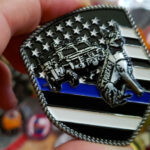
Specialized police coins highlight the unique training, tools, and missions of units like bomb squads and K9 teams.
6. K9 units are more than “police dogs”
Civilians often recognize police dogs, but K9 work is highly specialized. Dogs may be trained for patrol, tracking, narcotics detection, explosives detection, evidence searches, suspect location, or other focused tasks. The dog and handler work as a team, requiring constant training, trust, discipline, and care.
That partnership comes through clearly in K9 challenge coins. The Military Police K9 Challenge Coin was shaped like a paw print and featured Oso, a working dog, alongside the department logo. The Springfield Police K9 Coin also honors the unit’s training standards and the role K9 teams play in daily law enforcement work.
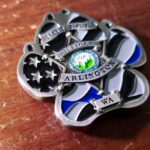

K9 challenge coins honor the discipline, training, and trust between working dogs and their handlers.
7. Police work depends heavily on training and professional standards
Police work requires training in law, ethics, report writing, emergency driving, de-escalation, defensive tactics, investigations, evidence handling, crisis response, and community interaction. Leadership training matters too, because supervisors shape department culture, accountability, mentorship, and how policies are applied in real situations.
The Southern Police Institute Coin connects directly to this professional side of policing. Created for SPI Command Officers in “Session 91,” the coin represents leadership development and advanced preparation for law enforcement practitioners. It is a reminder that effective policing depends on preparation, standards, leadership, and command-level judgment.
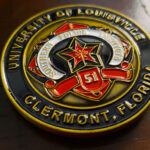
Leadership and training coins represent the professional standards, preparation, and command development behind effective police work.
8. Police departments depend on local identity and community trust
A police department is part of a city’s civic identity. Departments need community trust to work effectively, because civilians call police during emergencies, report crimes, provide witness statements, cooperate with investigations, and help identify public safety concerns.
Police challenge coins often reflect that local identity through town symbols, department insignia, mottos, landmarks, and civic history. The Coventry Police Challenge Coin, for example, ties the department to the community it serves through the town’s Coat of Arms and the elephant symbol associated with Coventry’s heritage.

The Coventry Police Challenge Coin reflects local identity through the town’s Coat of Arms, including the elephant symbol, traditionally seen as strong enough to carry Coventry’s castle full of armed men.
9. Police culture includes ceremony, memory, and recognition
Police culture includes ceremony, memory, and recognition. Challenge coins are often used to honor service, commemorate a unit, mark a milestone, or remember sacrifice. These traditions give officers something tangible to carry: a symbol of their department, their work, and the people who served beside them.
The Lewisville Police Challenge Coin shows this clearly. Created as a memorial coin for a fallen officer, it included the department insignia, SWAT emblem, rank insignia, and the officer’s name. Coins like this become lasting symbols of remembrance, respect, and shared identity.
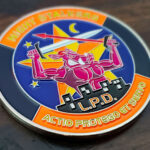
Memorial police challenge coins honor sacrifice and preserve the memory of officers, units, and significant moments.
What Police Challenge Coins Reveal About Law Enforcement
Police challenge coins reveal a great deal about U.S. law enforcement.
They show that policing is decentralized, local, specialized, and deeply tied to tradition. They also show that police work takes many forms: patrol, jail operations, K9 service, bomb response, military policing, leadership training, community relations, memorial recognition, and public safety outreach.
A well-designed police challenge coin captures the identity of a department, unit, or individual chapter of service. It can honor duty, recognize sacrifice, preserve history, and give officers something tangible to carry from one stage of their career to the next.
For police departments, sheriff’s offices, specialized units, and memorial projects, a custom challenge coin is a record of service, a symbol of belonging, and a lasting expression of the people and mission behind the U.S. law enforcement.
Recent Posts