The strongest navy in the world in 2026 is the United States. It remains the world’s strongest navy in 2026 when overall naval power, global reach, aircraft carriers, submarines, aviation, and combat capability are considered. China operates a larger fleet by total number of vessels, making the answer dependent on whether naval strength is measured by ship count or overall capability.
Naval power remains one of the clearest reflections of a nation’s global reach and maritime identity. From naval traditions to the Navy challenge coin, this list reveals how different nations build, modernize, and preserve fleets shaped by history, geography, technology, and tradition.
Why Naval Tradition Endures
For centuries, navies have protected trade routes, defended coastlines, projected power abroad, and responded to crises at sea. Before airpower existed, control of the oceans often determined the rise or fall of nations.
Even today, naval strength extends far beyond warfare alone. Modern fleets support humanitarian missions, disaster response, anti-piracy operations, strategic deterrence, and international security partnerships. A navy’s presence can stabilize regions, secure shipping lanes, and reinforce alliances.
Naval culture is also rooted in tradition. Ship names, hull markings, ceremonial uniforms, squadron insignia, and commissioning ceremonies become part of a service’s identity.
Sailors carry those traditions across generations. Naval service has always been tied to symbols representing pride, duty, and belonging. Those traditions are also reflected in everything from ship crests and command insignia to custom Navy challenge coins created for ships, squadrons, commands, and individual sailors.
Understanding the 2026 Naval Rankings
The 2026 naval rankings referenced in this article come from the World Directory of Modern Military Warships (WDMMA), which evaluates modern naval fighting capability across nations.
Rather than measuring strength by ship count alone, WDMMA uses a scoring system called TvR (True Value Rating). TvR evaluates the balance and capability of a fleet by considering factors such as:
- aircraft carriers
- submarines
- destroyers and frigates
- amphibious assault capability
- mine warfare
- patrol forces
- modernization
- force balance
- operational flexibility
A larger fleet does not automatically guarantee a higher rating. The composition, age, specialization, and balance of the fleet all play a role.
The World’s Strongest Navies in 2026
1. United States Navy (United States)
Fleet Identity Coin
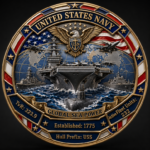
TvR: 323.9; Active Fleet Units: 232; Established: 1775; Hull Prefix: USS
Fleet Identity
The United States Navy continues to define global naval power through carrier aviation, nuclear submarines, amphibious assault capability, and worldwide deployment capacity. Its fleet is built for sustained blue-water operations across every major theater.
Interesting Detail
The U.S. Navy remains the world’s benchmark for carrier warfare and long-range force projection, supported by one of the most advanced logistics and support structures ever assembled.
That combination of operational capability and tradition has also created an enormous culture surrounding individual ships, squadrons, warfare communities, and commands. You can see examples of that identity in our Navy challenge coin designs.
2. People’s Liberation Army Navy (China)
Fleet Identity Coin

TvR: 319.8; Active Fleet Units: 405; Established: 1949
Fleet Identity
China’s navy has expanded into the largest fleet by active inventory in the top ten rankings. Its modernization strategy emphasizes blue-water capability, regional dominance, and long-term global reach.
Interesting Detail
The People’s Liberation Army Navy fields approximately 405 active fleet units, making it the largest active naval inventory in this ranking. That numerical advantage is one reason comparisons between the U.S. and Chinese navies depend heavily on whether “largest” means total ships or overall naval capability.
3. Russian Navy (Russia)
Fleet Identity Coin
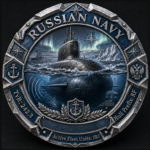
TvR: 242.3; Active Fleet Units: 283; Hull Prefix: RF
Fleet Identity
Russia’s naval identity remains heavily tied to submarine operations, missile deterrence, and Arctic capability. While portions of the fleet continue to age, undersea warfare remains central to Russian naval doctrine.
Interesting Detail
The Russian fleet maintains one of the strongest submarine-centered identities among the top-ranked navies, balancing strategic deterrence with regional surface operations.
4. Indonesian Navy (Indonesia)
Fleet Identity Coin
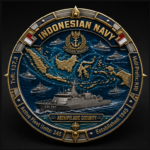
TvR: 137.3; Active Fleet Units: 245; Established: 1945; Hull Prefix: KRI
Fleet Identity
Indonesia’s geography shapes its navy more than almost any other country on this list. As one of the world’s largest archipelagic nations, maritime security and patrol coverage are critical responsibilities across thousands of islands and strategic waterways.
Interesting Detail
Rather than concentrating primarily on long-range power projection, Indonesia maintains a large and diverse fleet suited to patrol, coastal defense, maritime security, and operations across its enormous island territory.
5. Republic of Korea Navy (South Korea)
Fleet Identity Coin
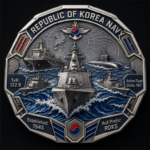
TvR: 122.9; Active Fleet Units: 147, Established: 1945, Hull Prefix: ROKS
Fleet Identity
South Korea has developed one of Asia’s most technologically advanced naval forces. Its fleet combines modern destroyers, submarines, amphibious vessels, and increasingly sophisticated domestically produced warships.
Interesting Detail
South Korea’s naval growth is closely connected to the country’s enormous shipbuilding industry, giving it a strong domestic foundation for designing, constructing, maintaining, and modernizing advanced naval vessels.
6. Japan Maritime Self-Defense Force (Japan)
Fleet Identity Coin
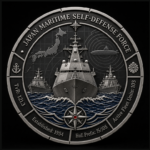
TvR: 121.3; Active Fleet Units: 103; Established: 1954; Hull Prefix: JS/JDS
Fleet Identity
Japan operates a highly modern maritime force built around advanced destroyers, submarines, maritime aviation, and anti-submarine warfare. Its island geography makes maritime defense particularly important to national security.
Interesting Detail
Japan’s fleet places exceptional emphasis on technological quality, anti-submarine warfare, and maritime surveillance, giving it capabilities that extend well beyond what its overall fleet size might initially suggest.
7. Indian Navy (India)
Fleet Identity Coin
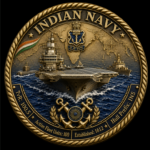
TvR: 100.5; Active Fleet Units: 100; Established: 1612; Hull Prefix: INS
Fleet Identity
India’s navy blends long maritime heritage with growing regional power projection. Its fleet includes aircraft carriers, nuclear submarines, destroyers, frigates, and expanding indigenous shipbuilding programs.
Interesting Detail
India operates two aircraft carriers, including INS Vikrant, commissioned in 2022 as part of the country’s growing domestic naval manufacturing capability.
8. French Navy (France)
Fleet Identity Coin
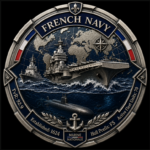
TvR: 92.9; Active Fleet Units: 70; Established: 1624; Hull Prefix: FS
Fleet Identity
France maintains a compact but globally capable navy built around nuclear deterrence, carrier operations, submarines, and overseas deployment capability across multiple regions.
Interesting Detail
The French Navy operates the nuclear-powered aircraft carrier Charles de Gaulle, one of the most recognizable capital ships in Europe and a major component of France’s ability to project naval airpower beyond European waters.
9. British Royal Navy (United Kingdom)
Fleet Identity Coin
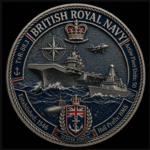
TvR: 88.3; Active Fleet Units: 50; Established: 1546; Hull Prefix: HMS
Fleet Identity
The Royal Navy remains one of the most historically influential naval services in the world. Today, its force structure emphasizes submarines, carrier operations, destroyers, and expeditionary capability.
Interesting Detail
The British Royal Navy traces its institutional roots back to 1546, making it the oldest established naval tradition among the top ten fleets listed here.
10. Turkish Navy (Turkey)
Fleet Identity Coin
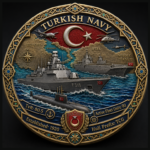
TvR: 80.5; Active Fleet Units: 90; Established: 1920; Hull Prefix: TCG
Fleet Identity
Turkey’s navy reflects its strategic position between Europe, Asia, and the Middle East. The fleet combines frigates, submarines, amphibious capability, patrol vessels, and growing domestic naval production.
Interesting Detail
Turkey continues investing heavily in indigenous naval programs, including modern amphibious and drone-capable platforms designed for regional operations.
Fleets That Define Maritime Power
The world’s strongest navies represent decades or even centuries of strategy, sacrifice, modernization, and maritime tradition.
These rankings reflect fleets with the reach, balance, technology, and operational strength to influence international events. They protect trade routes, project power, deter conflict, support allies, and respond when crises unfold at sea.
Behind every destroyer, carrier, patrol ship, and submarine is something deeper than military capability alone: identity. Hull markings, ship crests, naval insignia, command traditions, and commemorative traditions preserve the stories carried by the sailors who serve aboard them.
That connection between naval service and identity is one reason custom Navy challenge coins military challenge coins, and ship and squadron coins, continue to be used by ships, squadrons, commands, Chief’s Messes, and other naval communities. They turn the identity of a command or crew into something sailors can actually carry with them.
These are the world’s strongest navies in 2026, and each represents a different approach to maintaining power, presence, and influence at sea.
Recent Posts