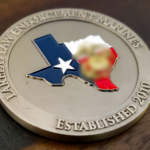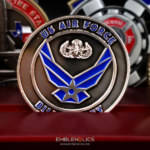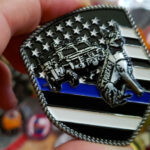
A challenge coin is a small custom-made medallion, usually 1.5 to 2 inches across, carried by members of a military unit, agency, department or organization as a mark of belonging. It’s given rather than bought, and it represents membership, recognition or a shared experience.
The coin typically carries the organization’s insignia on one face, such as a unit crest, department badge, agency seal or company logo. The other face carries something specific: a motto, a deployment, a date, a name or a location. Coins are struck or cast in metal, plated in gold, silver, nickel or an antique finish, and often filled with enamel color.
What separates a challenge coin from a medal or a souvenir is how it moves. It’s handed over personally, frequently in a handshake, by a commander, chief or leader to someone whose work warranted it. That transfer is the point. The value sits in who gave it and why, not in the metal.
The name comes from the coin check. A member produces their coin and challenges others present to produce theirs, with a penalty for whoever cannot, traditionally a round of drinks.
Challenge coins began in the military and have spread widely. Law enforcement, fire and EMS, federal agencies, corporations, fraternal organizations and civic groups all use them now.
See what a challenge coin is, where the tradition came from, or why some coins become collectable.
Recent Posts