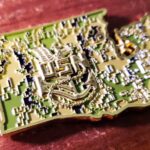
A 3D coin is one where the design is sculpted into multiple depths rather than cut flat, so light and shadow do the work instead of color. This one was made for the First Class Petty Officer Association at Naval Hospital Bremerton, and it is among the most involved coins we have produced: cut to the outline of Washington state, with a sculpted digital camouflage background on one face, a diamond plate pattern on the other, and Navy insignia and command graphics standing clear of both.
What makes a coin 3D
The term gets used loosely, so it is worth being precise. A standard struck coin has two levels: the raised design and the recessed field. A 3D coin has several, with contours and gradients cut into the die so surfaces curve and recede rather than sitting flat.
In practice that means three things are available that a flat coin cannot do:
- Modelled forms. A face, a figure, an animal or an aircraft can have actual volume, with a brow, a cheek or a fuselage that rounds away from the viewer instead of being outlined.
- Layered depth. Foreground, middle and background can each sit at their own level, which is what lets a scene read as a scene rather than as overlapping shapes.
- Sculpted texture across a whole surface. This is what this coin does. The camouflage and diamond plate are not printed patterns but cut relief, so they catch light differently as the coin tilts.
It costs more at the die stage and nothing afterwards. Sculpting takes design and tooling time, which is a one-time cost, and then reproduces across every coin in the run for free. That is the opposite of enamel, which is paid for on each individual coin, and it is why a 3D coin at a reasonable quantity is often better value than a heavily colored flat one.
When 3D is worth it, and when it is not
Worth it: anything with a figure, a face, a vehicle or an animal in it; a scene with depth; a coin that will be mostly or entirely unpainted and needs relief to carry it; a texture you want across a whole surface; a coin where you want the recipient to turn it over in their hand and find something.
Not worth it: a flat crest or logo, which is drawn in two dimensions and gains nothing from being modelled; a design that is mostly lettering, where depth helps the hierarchy but full sculpting is wasted; and very small coins, where there is not enough surface for multiple depth levels to read.
The honest test is whether you can describe what the extra depth is doing. If the answer is just “it looks better,” a flat coin with good relief heights and a textured field will get you most of the way for less. If the answer names something specific, like a face that needs volume or a background that should recede, 3D earns its cost.
Two textured backgrounds on one coin
Giving each face its own sculpted background is an unusual choice and a good one. It means the two sides read as deliberately different rather than as a front and an afterthought, and both textures do the same structural job: they give the raised insignia a surface to stand against.
Digital camouflage is a demanding pattern to sculpt. It is made of small hard-edged squares, and at coin scale the pattern has to be enlarged well beyond its real proportions or it turns to mush. Done right it reads as camouflage; done at true scale it reads as noise. This is the most common mistake with camouflage on coins.
Diamond plate is the easier of the two and one of the most reliable textures available: a repeating raised diamond that is unambiguous at any size and carries an association with equipment and hard use.
The rule for both is clearance. Anything sitting on a textured ground needs enough relief height to stand clear of it, or the texture competes with the artwork instead of supporting it. A design that works on a plain field does not automatically work on a textured one.
Naval Hospital Bremerton, and the FCPOA
Naval Hospital Bremerton has served sailors, Marines and their families in the Puget Sound region for well over a century, providing primary and emergency care along with a range of medical and surgical specialties to the military community in Kitsap County and the wider region.
The First Class Petty Officer Association is the command’s own organization, and that is who this coin belongs to. An FCPOA coin sits in a particular place: it is not the command’s official coin, and it is not a chief’s mess piece. First class petty officers are the senior enlisted rank below chief, and their association is where the command’s next generation of chiefs develops, so these coins tend to carry more energy and less formality than an official command coin while still representing the hospital.
That makes the design latitude wider than it looks. An FCPOA coin can be bolder than the command coin because the association is ordering it for itself, which is exactly why this one carries camouflage and diamond plate rather than a plain field.
This one is on our doorstep. Embleholics is a veteran-owned shop in Port Orchard, a few minutes from Naval Hospital Bremerton, so coins for commands around Kitsap County are a good part of what we do.
Ordering a 3D coin
Tell us what you want the depth to achieve. That is the question that decides whether 3D is the right spend on your coin, and we would rather tell you a flat coin will serve you better than sell you sculpting you do not need. If you want a textured background, send the pattern and we will show you what it looks like scaled for a coin, since most patterns need enlarging to survive. You can see more Navy challenge coins we have produced, including the NPTU FCPOA coin, or send your artwork through the free quote form.
Frequently Asked Questions
What is a 3D challenge coin?
A 3D challenge coin has its design sculpted into several depth levels rather than cut flat, so surfaces curve and recede and light and shadow define the artwork. A standard struck coin has two levels, the raised design and the recessed field; a 3D coin has contours and gradients cut into the die, which allows modelled forms, layered scenes and sculpted texture across a whole surface.
Does a 3D coin cost more than a flat one?
More at the die stage and nothing per coin afterwards. Sculpting is design and tooling time, paid once and then reproduced across the entire run for free. That is the reverse of enamel, which is charged on every coin, so at a reasonable quantity a 3D coin is often better value than a heavily colored flat one.
When is 3D not worth paying for?
For a flat crest or logo, which is drawn in two dimensions and gains nothing from being modelled; for a design that is mostly lettering, where varied relief heights help but full sculpting is wasted; and on very small coins, where there is not enough surface for multiple depth levels to read. If you cannot name what the extra depth is doing, a flat coin with good relief and a textured field will get you most of the way.
Can you put camouflage on a challenge coin?
Yes, but the pattern has to be enlarged well beyond its real proportions. Digital camouflage is made of small hard-edged squares, and reproduced at true scale on a coin it turns into visual noise rather than reading as camouflage. Scaled up correctly it works well, and it is the most common thing to get wrong with camouflage on coins.
What is the best texture for a coin background?
Diamond plate is among the most reliable: a repeating raised diamond that is unambiguous at any size and carries an association with equipment and hard use. Whatever texture you choose, anything sitting on it needs enough relief height to stand clear, or the background competes with the artwork rather than supporting it.
Can both sides of a coin have different backgrounds?
Yes, and it is an effective choice. Giving each face its own sculpted texture makes the two sides read as deliberately different rather than as a front and an afterthought, while both perform the same job of giving raised elements a surface to stand against.
What is an FCPOA coin?
An FCPOA coin belongs to a command’s First Class Petty Officer Association, the organization of the senior enlisted rank below chief. It is not the command’s official coin and not a chief’s mess piece, which gives it more design latitude: the association is ordering for itself, so these coins are often bolder and less formal than an official command coin while still representing the command.
More Navy Projects