What Happens After You Call 911? The People Behind EMS Response
What happens after you call 911? From dispatchers and EMTs to paramedics, rescue squads, and fire-EMS teams, emergency medical services involve far more than an ambulance ride. Learn how the EMS response works, why every step matters, and how custom EMS challenge coins honor the people behind the call.
What EMS Means
EMS stands for Emergency Medical Services.
In everyday language, EMS usually refers to the people and systems that respond to medical emergencies before a patient reaches the hospital. That can include emergency medical responders, EMTs, advanced EMTs, paramedics, ambulance crews, rescue squads, and fire-EMS teams.
Depending on the community, EMS may be run by a city, county, hospital system, private provider, fire department, volunteer rescue squad, or a combination of agencies. In some places, the first people on the scene may be firefighters. In others, a volunteer rescue squad may be the backbone of local emergency medical care.
Combined Fire-EMS Systems
Many communities operate a combined Fire-EMS system, where firefighters and EMS personnel work together as part of the same department. In these agencies, firefighters are often trained as EMTs or paramedics and may arrive before the ambulance to begin patient care.
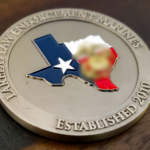
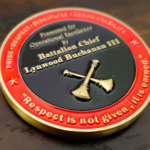
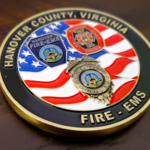
Hanover County Fire-EMS is a great example of this model. By combining fire protection, rescue operations, and emergency medical services under one organization, the department can coordinate resources quickly and efficiently during emergencies. This shared mission is reflected in the Hanover County Fire-EMS Challenge Coin, which brings together symbols of both fire service and EMS to represent the teamwork behind every response.
Volunteer EMS
Across the country, volunteer rescue squads continue to play a vital role in providing emergency medical care, especially in smaller communities and rural areas.
Volunteer EMS organizations are often deeply connected to the people they serve. Their members dedicate countless hours to training, responding to emergencies, supporting community events, and providing lifesaving care when it is needed most. Many of these organizations rely on community support, donations, and partnerships with local governments to continue their mission.
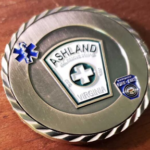
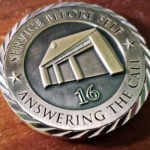
The Ashland Volunteer Rescue Squad is a great example of volunteer EMS in action. As the first rescue squad established in Hanover County, Ashland EMS has a long history of serving the community through emergency medical transport and public safety education. Operating under the umbrella of Hanover Fire-EMS, the squad combines local volunteer commitment with county-wide emergency response resources.
The Response Starts With the 911 Call
When someone calls 911 for a medical emergency, the first responder is the public safety telecommunicator who answers the phone.
That person has to do several things at once.
They need to find out where the emergency is happening. They need to understand what kind of emergency it is. They need to help determine whether EMS, fire, police, rescue, or multiple agencies should respond. They may also need to keep the caller calm and provide instructions until help arrives.
That is why 911 call-takers ask direct, specific questions.
Where are you? What happened? Is the person awake? Is the person breathing? Are there any dangers at the scene? How many people are hurt? What phone number are you calling from?
Those questions are part of the response. The answers help dispatchers send the right help to the right place.
Dispatch, Instructions, and the First Minutes of the Response
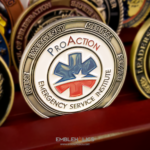
One of the most important things to understand about 911 is that help may already be on the way while the call-taker is still asking questions.
In many emergency systems, dispatch and information-gathering happen at the same time. While responders are being notified and sent toward the scene, the call-taker continues collecting details that can help the crew prepare before arrival.
If the patient is not breathing, responders need to know.
If there is a crash scene, responders need to know how many vehicles and patients may be involved.
If there is a fire, violence, water, traffic, hazardous material, or another danger, responders need to know before they step into the scene.
The questions help protect the patient, the caller, and the EMS crew.
At the same time, the dispatcher may provide instructions that can make a critical difference. Depending on the emergency, they may guide the caller through CPR, choking relief, bleeding control, or other basic first aid measures.
The goal is to help them do what they can, safely, until trained responders reach the scene.
The Decisions EMS Makes on Scene
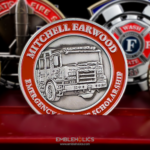
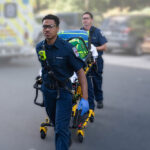
When EMS crews arrive, they begin assessing the scene and the patient. They may evaluate breathing, circulation, mental status, injuries, symptoms, medical history, medications, allergies, and other details that can affect care. Depending on the situation and the crew’s level of training, they may begin treatment before the patient ever reaches the emergency department.
EMS work requires both medical skill and operational judgment.
The crew has to think about the patient and the scene. Is it safe? Do they need more help?
Can the patient be moved? Should fire, police, rescue, or another unit be involved? Which hospital or facility is appropriate based on the emergency and local protocols?
The Team Behind the Sirens

A single EMS response can involve more people than most of us realize: the dispatcher who answers the call, the crew responding from the station, firefighters beginning care, police securing a scene, rescue personnel helping with access or transport, and hospital staff preparing for handoff.
Most of that work happens quickly, quietly, and outside the public eye. EMS coins give a visible shape to a mission most people only see for a few minutes.
Why EMS Teams Create Challenge Coins
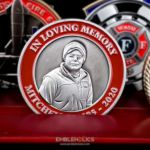
Challenge coins have long been connected to military and first responder culture. For EMS teams, they can carry a very specific kind of meaning.
An EMS coin can represent a department, rescue squad, station, county system, training class, anniversary, deployment, memorial, retirement, or special unit. It can be given to members, volunteers, partner agencies, community supporters, instructors, graduates, or visiting departments.
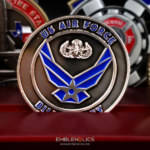
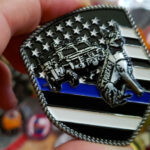
EMS challenge coins can hold the symbols of the organization: the Star of Life, an ambulance, a rescue emblem, a county seal, a department badge, a unit number, a motto, a founding year, or a local landmark. They can also show the character of the team: formal, simple, bold, traditional, modern, volunteer-driven, or deeply tied to the community.
For people who spend their careers responding to emergencies, a coin gives the mission a physical shape.
A Coin for the Work Most People Never See
By the time an ambulance leaves the scene, an entire chain of response has already happened.
Most of that work happens outside the public eye.
That is why EMS challenge coins matter. They honor the people who train for emergencies, answer the call, and carry the identity of their team with pride.
If your EMS team, rescue squad, fire-EMS department, or emergency services organization wants to create a custom challenge coin, Embleholics can help turn your story into a coin your members will be proud to carry.
Request a quote today, and we’ll help you start the design process.
Recent Posts