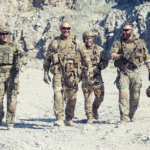
Since June 14, 1775, the U.S. military has grown to include six branches (Army, Navy, Marines, Air Force, Coast Guard, Space Force) and over 2 million military members while becoming one of the most powerful militaries on the planet.
Spend enough time in any unit, and you’ll hear the unofficial language: passing comments, quick reactions, and moments when plans don’t hold.
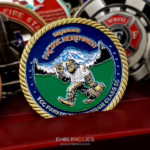
For 250 years, the U.S. military was built on structure, discipline, and precision. Alongside it, a culture formed, one that produced some of the most recognizable military slang acronyms still used today. That culture also includes traditions and symbols of military service, such as challenge coins. What is a challenge coin? It’s a small coin or medallion traditionally given to members of the military to recognize service, achievements, or membership in a particular unit or organization.
If you’re an active-duty U.S. military member or one of the roughly 16 million U.S. veterans, some of the acronyms might be coming to your mind: SKATE, BOHICA, SNAFU, FUBAR, TARFU. Some are practical and some are just a way to say what everyone’s thinking without having to spell it out.
Below are some of the most widely used and remembered military acronyms, along with what they really mean in practice.
1. SKATE
Seek Cover, Keep a Low Profile, Avoid Higher-Ups, Take Your Time, Enjoy Yourself
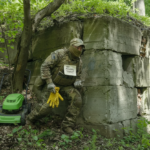
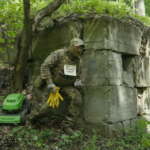
Not in the mood to take part in the manual tasks that military “working parties” are typically asked to do, such as mowing the lawn? You might try to SKATE.
You’ll usually see this when a working party is forming and someone suddenly becomes hard to find. SKATE is used when someone is trying to stay out of unnecessary work or avoid getting pulled into a task.
The instinct behind it is universal, which is why the phrase shows up well outside the military.
2. BOHICA
Bend Over, Here It Comes Again
BOHICA shows up when military members are given undesirable assignments, and there isn’t anything they can do about it.
Often late notice. Often inconvenient. Always accepted.
BOHICA was first used during the Vietnam War and spread into civilian life because it expressed a shared reality: sometimes, you don’t get a say, you just get the task.
It even inspired the comic strip “The Bohica Brothers” in the U.S. Naval Academy’s humorous magazine The LOG in the 1970s.
3. SNAFU
Situation Normal: All F*****/Fouled Up
You’ll hear this when things aren’t going according to plan, but no one is surprised. SNAFU supposedly got its start among the Marines during World War II.
It’s primarily used to describe dangerous situations that have somehow started feeling normal. A delayed timeline. Conflicting orders. Equipment that doesn’t cooperate.
What makes SNAFU stick is the acceptance behind it. The understanding that imperfect situations are often the norm, not the exception.
It’s one of the clearest examples of how service members used humor to deal with friction without losing focus on the mission.
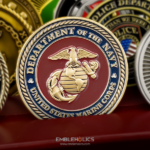
Classic Navy crest surrounded by a detailed rope border.
4. FUBAR
Fouled Up Beyond All Recognition (or Repair)
Like SNAFU, FUBAR dates back to World War II. It refers to any situation that has taken a turn for the worst. This gets used when a situation has gone far enough off track that it’s no longer salvageable in any practical way.
If SNAFU is manageable, FUBAR is not.
You’ll hear it after something breaks, fails, or unravels completely, usually followed by a reset and a new plan.
5. TARFU
Things Are Really F***** Up
TARFU managed to capture the mood of many military members at the time.
Warner Bros. released military-themed animated shorts during World War II, including Three Brothers, which featured the characters Private Snafu and Private Fubar. One of the final shorts to come out of this series was Private Snafu Presents Seaman Tarfu in the Navy.
Think of TARFU as the step between SNAFU and FUBAR. Things aren’t normal anymore, but they’re not completely beyond recovery either.
6. FAP
Fleet Assistance Program
Originally, it refers to a program the Marines put in place allowing one unit to “FAP out” (don’t Google this!) those nearing the end of their enlistment periods to other units.
The phrase “getting FAP’d out” became shorthand for being moved where needed, regardless of original assignment.
If you Google “FAP” (don’t do it, either!), you’ll find that this military slang acronym has taken on a much different meaning in 2026.
Like many acronyms, its meaning has evolved outside the military, but within it, the definition remains specific and practical.
7. STEAL
Strategic Transfer of Equipment to Alternate Locations
There’s no stealing allowed in the U.S. military. But STEALing? Oh, that’s perfectly acceptable.
It means taking military equipment that wasn’t originally given to you and repurposing it.
Not theft. Not exactly borrowing either. More like resourcefulness under pressure.
8. BCG
Birth Control Glasses
About one-quarter of U.S. military members wear glasses. However, they aren’t allowed to wear traditional eyeglasses and must instead wear BCGs.
Military recruits who require corrective lenses have historically been issued standardized military eyeglasses designed for function rather than fashion. Their famously unflattering appearance earned them the nickname “BCGs,” or “Birth Control Glasses.”
Issued for function, not appearance, they’re immediately recognizable to anyone who’s worn them.
If you’ve ever seen what these glasses look like, you know why they deserve this name.

BCG
9. FIGMO
F*** It, Got My Orders
Military members use FIGMO when someone who’s received orders to move on (new duty station, new assignment) has mentally shifted out of their current role.
Still present, still doing the job, but already focused on what comes next.
Just as that feeling you get when you’ve put in your two weeks’ notice at a job. You still have to show up every day and “work,” but you’ve already mentally checked out.
10. RHIP
Rank Has Its Privileges
Each U.S. military branch has military ranks that break down where different commissioned officers, warrant officers, non-commissioned officers, and enlisted personnel land within its hierarchical system.
RHIP is used (sometimes seriously, sometimes not) to acknowledge the reality that higher rank comes with certain benefits and authority, and making sure their subordinates know why.
From Slang to Symbol: Why These Phrases Last
Over time, some acronyms become part of a unit’s identity.
Usually, the ones tied to shared moments: a deployment that didn’t go as expected, a training exercise that turned into something else entirely, or a standing joke everyone understands without explanation.
A phrase like SNAFU might start as a passing comment, but years later, it shows up again, and everyone who was there understands it immediately.
They get reused, repeated, and remembered. In many cases, they turn identity and membership into something permanent, just like a challenge coin.
A single phrase, stamped into metal, can carry years of context that only the people who lived it fully understand.
Use These Phrases to Create A Lasting Challenge Coin
The phrases that stick are the ones people carry with them back to their civilian life.
We can use these funny military slang acronyms, or any phrase unique to your unit, on custom military challenge coins. Take a look at some of the coins we have made for units. Embleholics can help you design one from start to finish, with the right materials, finishes, and details to match what it represents.
Recent Posts