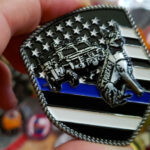
In a handshake. The coin rests in the giver’s palm, transfers during the shake, and the recipient accepts it without drawing attention to it. The quietness is the point.
How it works in practice:
- The giver places the coin in their right palm, held against the fingers rather than loose, then shakes hands normally. A few words about why it is being given are usual. Holding the coin up first, or announcing it, undercuts the gesture.
- The recipient takes the coin in the handshake, says thank you, and pockets it. Examining it closely at that moment is not wrong, but most people look at it afterwards.
- What not to do. Do not hand it over like change. Do not leave it on a desk to be collected. Do not post it to someone who could be handed it in person. The transfer is most of what the coin means.
In a formal setting such as a retirement, a change of command or an award, the handshake presentation often happens in front of an audience, and the coin may be accompanied by a few words. The mechanics stay the same.
A coin given by a commander, chief or senior leader carries weight because of who gave it, not what it cost. That is worth remembering on both sides of the handshake.
See what a challenge coin is, coin check rules, or the gallery.
Recent Posts