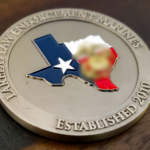
The U.S. Marshals Service is the nation’s oldest federal law enforcement agency and serves as the enforcement arm of the federal courts. U.S. Marshals and Deputy U.S. Marshals protect the federal judiciary, apprehend fugitives, transport and manage federal prisoners, operate the federal Witness Security Program, and manage assets seized through federal investigations.
Created in 1789, the U.S. Marshals Service has served the federal justice system for more than two centuries. Today, its responsibilities extend from courthouse security and fugitive investigations to witness protection and major interagency law-enforcement operations.
What Do U.S. Marshals Do?
The U.S. Marshals Service carries out several major federal law-enforcement missions, including:
- Fugitive apprehension: Locating and arresting federal fugitives and assisting state and local law-enforcement agencies with violent fugitives.
- Judicial security: Protecting federal judges, courthouses, court officials, jurors and others involved in the federal judicial process.
- Witness security: Operating the federal Witness Security Program for witnesses and authorized family members whose lives are threatened because of their cooperation with the government.
- Prisoner operations and transportation: Managing federal detainees in U.S. Marshals custody and coordinating secure transportation between courts, detention facilities and correctional institutions.
- Asset forfeiture: Managing and disposing of property seized through the Department of Justice Asset Forfeiture Program.
- Federal court orders: Carrying out orders issued through the federal judicial system.
The U.S. Marshals Service is also the federal government’s primary agency for fugitive investigations and works extensively with federal, state and local law-enforcement partners.

Who Are the U.S. Marshals?
There is a distinction between a United States Marshal and a Deputy U.S. Marshal. A U.S. Marshal leads operations within a federal judicial district, while Deputy U.S. Marshals perform many of the agency’s day-to-day law-enforcement missions.
There are 94 federal judicial districts, with a presidentially appointed U.S. Marshal directing Marshals Service activities in each district.
Deputy U.S. Marshals carry out much of the agency’s operational work, including fugitive investigations, judicial protection, prisoner operations, witness security and other federal law-enforcement missions.
History of the U.S. Marshals Service
The U.S. Marshals Service traces its origins to the Judiciary Act of 1789. Signed into law by President George Washington on September 24, 1789, the legislation established the federal judicial system and created the Office of the United States Marshal.
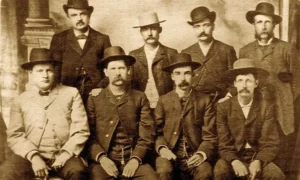
President Washington appointed the first 13 U.S. Marshals shortly afterward. Since then, the Marshals Service has participated in major moments throughout American history while maintaining its core responsibility of supporting and enforcing the authority of the federal courts.
Its historical responsibilities have included everything from serving federal court orders and enforcing federal laws to protecting the judicial process during periods of major national conflict and social change.
What Are the Training Requirements for Deputy U.S. Marshals?
Becoming a Deputy U.S. Marshal involves a competitive federal hiring and training process. Applicants must meet qualification requirements through education, qualifying experience, or an approved combination of the two, depending on the position and grade level.
The selection process can include a qualifications review, fitness screening, structured interview, background investigation, medical screening and drug testing.
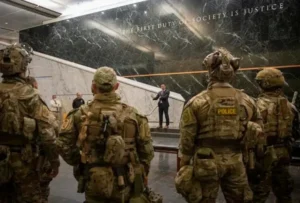
New Deputy U.S. Marshals must successfully complete approximately 18 to 19 weeks of Basic Deputy U.S. Marshal Integrated training at the Federal Law Enforcement Training Center in Glynco, Georgia.
Training prepares new deputies for the wide range of physical, investigative and protective responsibilities required by the Marshals Service.
Why the U.S. Marshals Service Is Unique
The Marshals Service occupies an unusual position in American law enforcement because its responsibilities connect directly to the federal court system while also requiring extensive investigative and operational capabilities.
A Deputy U.S. Marshal may work on fugitive investigations, protect federal judicial personnel, assist with high-risk prisoner movements or support other law-enforcement agencies through multi-agency operations.
That combination of history, federal authority and varied mission responsibilities has made the U.S. Marshals Service one of the country’s most recognizable federal law-enforcement organizations.
Custom U.S. Marshals Challenge Coins
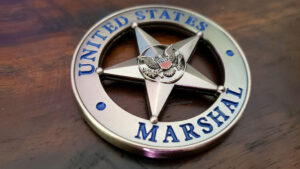
US Marshals challenge coins have long been associated with military and law-enforcement traditions, where they may represent organizations, units, accomplishments, assignments and shared experiences.
Embleholics creates custom U.S. Marshals challenge coins and other federal law-enforcement coin designs for organizations looking to commemorate service, recognition, retirements, special assignments and other important events.
Designs can incorporate badges, federal agency challenge coins, office or district elements, custom shapes, dimensional artwork and different metal finishes depending on the project.
You can also explore our challenge coin manufacturing options or request a free quote to begin a US Marshals coin we produce.
Recent Posts