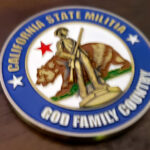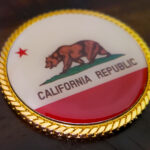
A state or civic challenge coin marks belonging to a place rather than to a unit. Agencies, community organizations and residents order them, and the design is usually built around a seal, a landmark, or the imagery a state or county already uses to represent itself.
Who Orders State and Hometown Challenge Coins?
Challenge coins started in the military and most people still assume that is where they end. They do not, and the civilian side of this is considerably larger than it looks.
If you work for a county or a city and you have been wondering whether a challenge coin is even an appropriate thing for your organization to have, the answer is yes, and you would be in a lot of company.
Who orders them:
- State agencies and offices. Departments, boards and commissions, often marking an anniversary or recognizing long service.
- County government. Commissioners, county administration and departments.
- Sheriff’s offices and emergency management. Frequently the first civic organization in a county to order coins, since the tradition transfers naturally from law enforcement.
- State defense forces and militia organizations. State-authorized volunteer forces with their own structures and identities.
- Chambers of commerce and tourism boards. Coins given to visiting delegations, new members and at civic events.
- Sister-city programs. Exchanges where both cities produce something to give, and a coin travels better than almost anything else.
- Heritage and community organizations. Historical societies, founding families associations, county fairs and civic groups.
The occasions: statehood and founding anniversaries, county and city centennials, disaster response recognition, delegation and exchange visits, retirements after long public service, and civic events where something needs to be handed over.
The gallery is full of this work already, including county sheriff coins and state agency coins.
Can You Use a State Seal on a Challenge Coin?
This is the first question most civic buyers hit, and it deserves a straight answer.
Most states restrict the use of their seal, flag and coat of arms, usually by statute, and the rules differ from state to state. Some restrict commercial use specifically, some require authorization for any reproduction, and some treat the seal differently from the flag. There is no single national rule.
In practice this is rarely an obstacle, because the organizations ordering these coins are usually the ones entitled to use the imagery. A state agency using its own state’s seal, or a county using its own seal, is generally working within an existing authorization rather than seeking a new one. Where that is less clear, such as a community group or a private organization wanting state imagery, it is worth resolving before artwork begins rather than after.
Our position is the same as it is on federal agency work. We produce coins from artwork the customer is authorized to supply, and we will raise it if a design appears to include imagery the customer may not control. If you are a public agency, your own counsel is the right place to confirm what you may use. We are coin manufacturers, not lawyers, and we would rather say that plainly than pretend otherwise.
What Goes on a State or County Coin?
Civic design vocabulary is deep, because states and counties have been building visual identities for a long time.
Seals, flags and coats of arms where authorized. These are usually the anchor of the design, and they tend to be detailed, which affects how the rest of the coin is laid out.
Landmarks and landscape. The Golden Gate Bridge, the Rockies, a state capitol dome, a coastline, a mountain that everyone in the state recognizes from the road. Landmarks often work better than seals on a coin, because they read instantly and they are what people actually picture.
State symbols. Every state has an official animal, bird, flower and tree, and most have a motto. Texas has the Lone Star, California the grizzly bear, Alaska the Big Dipper, Maryland one of the most distinctive flags in the country.
Outlines. A state or county silhouette is one of the most used devices in this category, either as the coin’s shape or as an element within it. Coins whose shape represents a place are covered on our custom shaped challenge coins page.
Founding and statehood dates. Almost always present, usually on the reverse.
Why Vintage and Medal Finishes Suit Civic Coins
Most civic coins end up with an antique or medal-style treatment, and there is a good reason for it beyond taste.
Civic imagery is old. State seals, coats of arms and mottos were mostly designed in the nineteenth century or earlier, drawn in a heraldic style with fine engraved line work and Latin phrases. A bright modern finish fights against that. The design says one thing about its age and the surface says another.
An antique or brushed finish agrees with the subject instead. The darkened recesses give engraved line work the shadow it was drawn to have, and the whole piece reads as belonging to the same era as the imagery on it. That is why so many civic coins look more like commemorative medals than like modern challenge coins, and it is usually the right instinct. You can see the same thinking across our commemorative challenge coins.
About This California Coin
This coin was built as a classic piece rather than a modern one. The vintage treatment preserves the feel of an old-school memento, closer to a struck commemorative medal than to a contemporary challenge coin.
For a California coin that is a defensible choice, because the state’s own imagery invites it. California’s seal dates from 1849, drawn in the heraldic style of its period, and the state’s visual identity has been accumulating since well before that.
There is one detail in California’s history worth a coin designer’s attention. The state is named after a fictional place: an island paradise ruled by Queen Calafia, described in Las Sergas de Esplandián, a Spanish romance published in the early sixteenth century and popular among the explorers who first reached the Pacific coast. California is one of the few places named after somewhere that never existed, which is a good thing to know when you are deciding what belongs on a coin about the place.
A separate California state militia coin in the gallery takes a different approach to the same state.
Design a Coin for Your State, County or Town
Artwork is free and revisions are unlimited, which matters when a design has to go past a board, a commission or an elected official before anyone commits.
Orders start at 50 coins, shipping within the continental United States is included, and most orders are complete in 45 to 50 days after artwork approval. Rush production is available if you are working to an anniversary date or a scheduled event.
Embleholics is veteran-owned, based in Port Orchard, Washington, and registered in SAM as a Service-Disabled Veteran-Owned Small Business under UEI F3AGRUW5RT53, which matters if the order runs through a public purchasing process. Request a quote and you will hear back within 24 hours.
Frequently Asked Questions
What is a state challenge coin?
A state challenge coin marks belonging to a place rather than a military unit. It is usually built around a state seal, flag, landmark or symbol, and is carried by agencies, community organizations and residents.
Who orders state and county challenge coins?
State agencies and offices, county government, sheriff’s offices, emergency management, state defense forces, chambers of commerce, sister-city programs, and heritage and community organizations.
Can you use a state seal on a challenge coin?
Most states restrict use of their seal, flag and arms, and the rules vary by state. Public agencies should confirm with their own counsel. We produce coins from artwork the customer is authorized to supply.
Can a city or town order challenge coins?
Yes. Cities, towns and counties order coins for anniversaries, civic events, delegation visits and recognition of public service. The minimum order is 50 coins.
What goes on a hometown challenge coin?
Seals and flags where authorized, landmarks, state or county outlines, official state symbols such as animals and flowers, mottos, and founding or statehood dates.
What is an antique or medal finish?
An antique finish darkens the plating and polishes the raised surfaces back, leaving shadow in the recessed detail. It suits civic imagery because seals and arms were drawn in an engraved style the treatment complements.
Do you make coins for chambers of commerce and community groups?
Yes. Chambers, tourism boards, historical societies, sister-city programs and community organizations all order coins, often for delegation visits, new members or civic events.
What is the minimum order?
The minimum order on coins is 50. Most orders are complete in 45 to 50 days after artwork approval, and rush production is available if you are working to an anniversary or event date.
More Militias Projects